LIVE MONITORLIVE
Loading latest updates...
Masthead— 5 sections · ~12 min read
An independent, non-partisan registry of politically motivated prosecutions — built on the casework of frontline human-rights organizations, translated into English, structured into one database, and traceable, case by case, back to its sources.
01Mission§ 01.1 – § 01.4
Our mission
Political Prisoner Watch documents cases of political imprisonment in Russia, Belarus, Georgia, Kazakhstan, and Central Asia. The primary documentation comes from organizations that have done this work for decades — Political Prisoners Support. Memorial, OVD-Info, Viasna, CPJ, and regional monitors. We translate their case records into English, structure them into a single searchable database, and keep every entry pointed back at the organization that documented it.
Our inclusion criteria are grounded in international human rights law, drawing on the frameworks of PACE Resolution 1900, Memorial, Freedom House, and Freedom Now. We distinguish prisoners of conscience from people subject to politically motivated prosecution, and every case page credits the organization that documented it.
“We are an independent project. We do not duplicate the primary documentation work done by frontline organizations — we make their work more accessible to English-language audiences who would not otherwise encounter it.”
Framework
PACE Res. 1900
Inclusion criteria
Original research
What the data shows
The registry is the record; the findings are the argument. Each one is a single, checkable claim about how repression works — a law that did not exist before the invasion, a charge family that went from footnote to conveyor, a crackdown that came for a different generation the second time. The numbers are computed live from the case database, and every claim sits on named, sourced cases.
Read the findings →02The team
The leadership
An independent, non-partisan registry of politically motivated prosecutions — built on the casework of frontline human-rights organizations, translated into English, structured into one database, and traceable, case by case, back to its sources.
01Founder and oversight
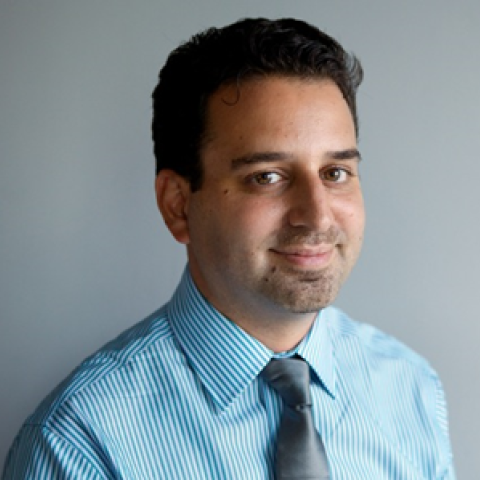
Steve Swerdlow
Steve Swerdlow, Esq. serves as Founder and Oversight of Political Prisoner Watch. He is a human rights lawyer and Associate Professor of the Practice of Human Rights at the University of Southern California. An expert on the former Soviet region, he teaches international human rights law, research, and advocacy.
Previously, he served as Senior Central Asia researcher at Human Rights Watch from 2010 to 2019, where he led work on Uzbekistan and Tajikistan and founded the organization's Kyrgyzstan field office. His extensive field experience includes missions to Azerbaijan, Moldova, Russia, and Kazakhstan. He received his J.D. from UC Berkeley School of Law and an M.A. in International Affairs from Columbia University.

02Founder and developer
Kenan Korn
Kenan founded Political Prisoner Watch in 2025 and runs the platform's research, engineering, and operations. He holds a BA in Political Science and holds a minor in Law and Technology from the University of Southern California, where he worked with Professor Swerdlow on Russian, Belarusian, and Central Asian prosecution patterns, and is an incoming MPhil candidate at the Leverhulme Centre for the Future of Intelligence at the University of Cambridge.
His prior research has appeared in The Cambridge Journal of Law, Politics, and Art, and he has conducted legal research on AI governance for a Magic Circle firm.
03Researcher
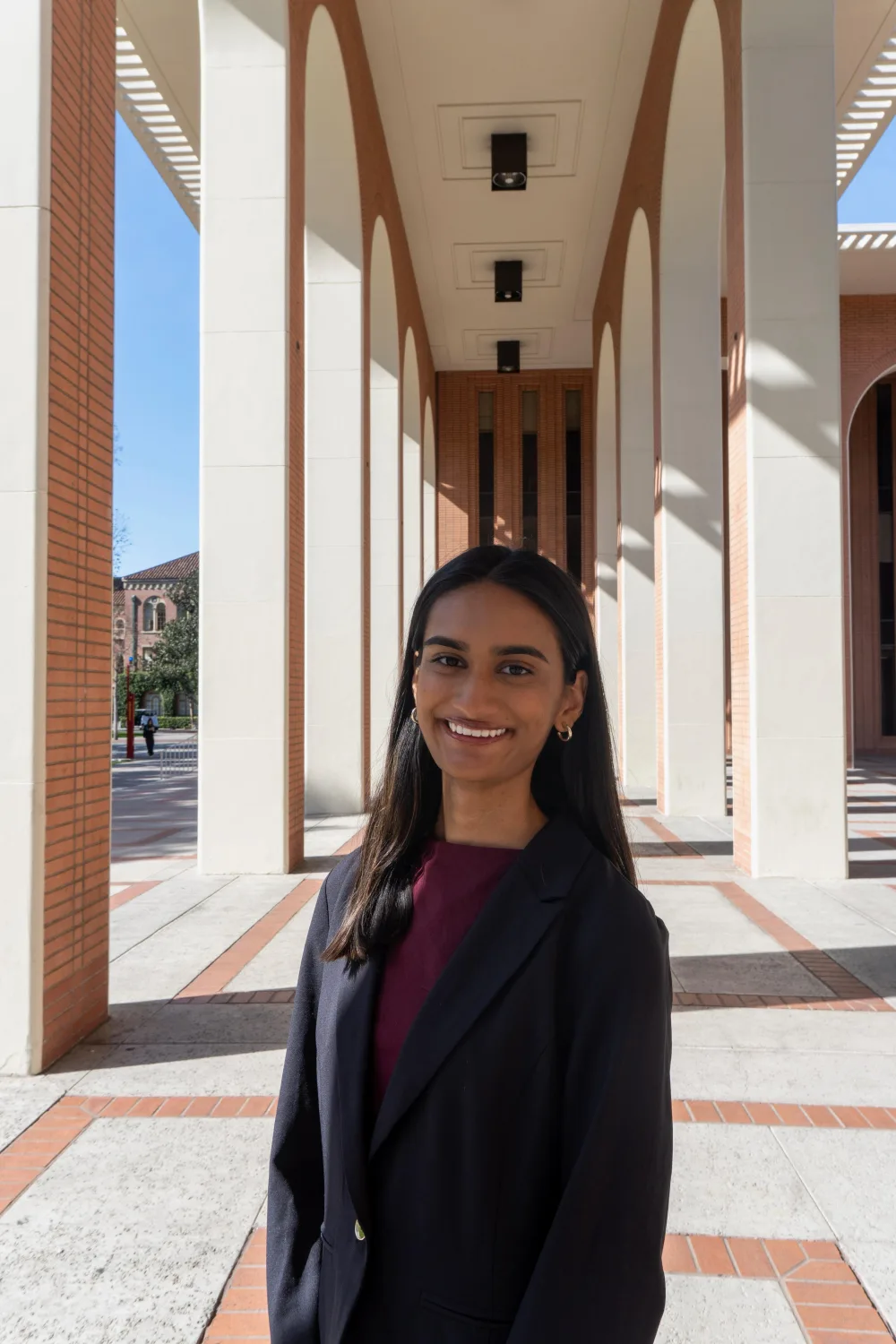
Shiza Khan
Shiza Khan holds a BA in Political Science and a minor in Legal Studies from the University of Southern California. She has conducted field research with Professor Swerdlow in Georgia and Armenia on ethnic minorities and democratic backsliding.
She wrote her thesis on the historical persecution of Meskhetian Turks and contemporary displacement dynamics marked by mandatory conscription efforts by the Russian military, titled "A People of Perpetual Exile: Political, Economic, and Social Drivers of Meskhetian Turk Displacement."
Regional concentration
TürkiyeUzbekistanGeorgia

04Researcher
Olivia Batist
Olivia Batist holds a BA in International Relations from the University of Southern California, where she conducted field research with Professor Swerdlow in Kyrgyzstan and Kazakhstan on political prisoners, constitutional law, election fraud, and political repression.
Her research focuses on human rights and democratic governance in the post-Soviet region, and she has contributed to expert witness research on political persecution and asylum claims. She is also a recipient of a litigation fellowship at a plaintiff-side civil litigation firm, where she contributes to case development and legal research in efforts to hold institutions accountable on behalf of victims.
Regional concentration
KyrgyzstanKazakhstanUkraine

05Researcher
Claire Krysler
Claire Krysler is from California and recently graduated from the University of Southern California, where she majored in Political Science with an emphasis in cross-national relations and human rights.
During her time at USC, she took two human rights field-based classes in Georgia, Armenia, Kyrgyzstan, and Kazakhstan. She is deeply passionate about improving human rights conditions globally and raising awareness of political prisoners, especially in Central Asia and Latin America.
Regional concentration
TürkiyeMexicoKyrgyzstanKazakhstanSocial Media
03Coverage
What we cover —
and what we don't.
…
Cases on record
Across — jurisdictions, refreshed continuously from the organizations that document them.
…
Active jurisdictions
Russia · Belarus · Georgia · Kazakhstan, with cases from across Central Asia.
§ 03.1 · What we coverIn scope
Documented cases in Russia, Belarus, Georgia, and Kazakhstan,
with cases from Uzbekistan, Tajikistan, Kyrgyzstan, and Turkmenistan. Every entry names the organization that documented it and links to the original record.
§ 03.2 · What we do not doOut of scope
We are not a primary documentation source. We do not conduct field investigations, interview families, or verify charges independently. We rely on the rigor of the organizations whose data we aggregate.
03.3Where we're going
Coverage grows where credible documentation exists. Georgia entered the registry in 2025, when two protest crackdowns produced a political-prisoner population almost overnight. Near-term work is deeper Central Asian coverage and published findings for every country we document. Longer term, we want the registry and its findings to serve casework beyond the post-Soviet space — anywhere political imprisonment is systematically documented.
04Platform infrastructure§ 04.1 – § 04.3
Platform infrastructure
What runs under the registry — the models, what they are for, and how the platform has changed.
HUMAN OVERSIGHTEvery model output is designed to augment human analysis, not replace it.
XGBOOST
Core classifiers
Flags cases with elevated risk of torture or urgent deterioration, using charge codes, demographics, and detention venue — so human reviewers look at the right cases first.
Module 04.1.AV 2.4
LIGHTGBM
Surveillance attribution
Traces which cases involve facial recognition or intercepted communications, to map where surveillance technology is doing the state’s work.
Module 04.1.BV 1.8
PROPHET
Trend forecasting
Projects arrest rates 90 days ahead from the documented series, giving response organizations a planning horizon instead of a rearview mirror.
Module 04.1.CV 3.0
Transparent by design
The methodology page sets out how cases enter the database, how the models are trained and evaluated, and where the data is thin. If a number on this site cannot be traced to its cases, that is a bug — tell us.